
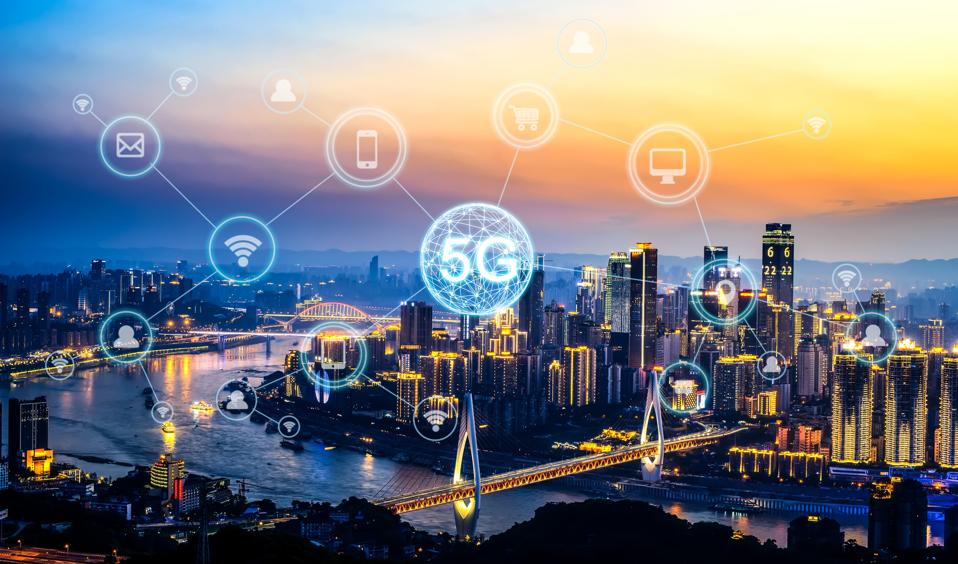
Digital transformation depends on speed, connectivity, and real-time intelligence. 5G technology delivers all three at an unprecedented scale. By enabling faster data transmission, ultra-low latency, and massive device connectivity, 5G is reshaping how businesses operate, how cities function, and how people interact with technology.
Unlike previous generations of mobile networks, 5G is not just an upgrade—it is a foundational shift that unlocks entirely new digital capabilities.
Understanding What Makes 5G Different
5G introduces technical improvements that directly support modern digital demands.
Key Capabilities of 5G Technology
- Ultra-low latency enabling near-instant communication
- High data speeds supporting rich media and complex applications
- Massive device connectivity for large-scale IoT ecosystems
- Network slicing to tailor performance for specific use cases
These capabilities make 5G a critical enabler of advanced digital transformation initiatives.
Accelerating Smart Cities and Infrastructure
Urban environments rely on data to operate efficiently. 5G enables cities to process and act on that data in real time.
Smarter Urban Systems
With 5G, cities can deploy:
- Intelligent traffic management systems
- Real-time public safety monitoring
- Smart energy grids and water management
- Connected public transportation
These systems reduce congestion, improve sustainability, and enhance quality of life for citizens.
Transforming Industry and Manufacturing
Industrial digital transformation requires reliable, real-time connectivity—something 5G is uniquely positioned to deliver.
Enabling Smart Factories
5G supports advanced manufacturing through:
- Real-time machine monitoring
- Autonomous robots and vehicles
- Predictive maintenance using live sensor data
- Flexible production lines
This results in higher efficiency, reduced downtime, and faster innovation cycles.
Powering the Internet of Things at Scale
The Internet of Things depends on seamless connectivity between millions of devices. 5G removes many of the limitations that previously held IoT back.
Massive IoT Deployments
5G allows organizations to:
- Connect vast numbers of sensors simultaneously
- Collect and analyze data instantly
- Support mission-critical applications with minimal delay
From agriculture and logistics to healthcare and utilities, IoT-driven transformation becomes more practical and scalable.
Redefining Healthcare Through Connectivity
Healthcare digital transformation demands reliability, speed, and precision.
Real-Time and Remote Care
5G enables healthcare providers to:
- Support remote consultations with high-quality video
- Enable real-time patient monitoring through connected devices
- Assist in robotic and remote-assisted procedures
- Improve emergency response times
These advancements improve patient outcomes while expanding access to care.
Enhancing Business Agility and Innovation
Businesses across sectors are using 5G to rethink how they deliver products and services.
New Digital Business Models
5G supports innovation by enabling:
- Immersive experiences using augmented and virtual reality
- Real-time data analytics at the edge
- Faster deployment of cloud-based applications
- Seamless mobile-first customer interactions
This agility helps organizations respond quickly to market changes and customer expectations.
Supporting Edge Computing and Real-Time Data Processing
Data-driven transformation depends on speed—not just in transmission, but in decision-making.
Bringing Intelligence Closer to the Source
5G complements edge computing by:
- Processing data closer to devices
- Reducing reliance on centralized cloud infrastructure
- Enabling instant insights and automated responses
This is especially valuable for use cases like autonomous systems, industrial automation, and smart surveillance.
Strengthening Remote Work and Collaboration
Modern workforces are increasingly distributed. 5G improves how teams connect and collaborate.
- More reliable mobile connectivity
- High-quality video conferencing without lag
- Support for cloud-based collaboration tools anywhere
This flexibility supports productivity beyond traditional office environments.
Long-Term Impact on Digital Transformation Strategies
5G is not a short-term trend. It is a long-term enabler that supports continuous digital evolution.
Organizations that invest early in 5G-ready infrastructure gain:
- Greater scalability
- Faster innovation cycles
- Stronger competitive positioning
As digital ecosystems grow more complex, 5G becomes a critical foundation for sustainable transformation.
FAQs
How does 5G differ from 4G in driving digital transformation?
5G offers significantly lower latency, higher speeds, and greater device capacity, enabling real-time and large-scale digital applications that 4G cannot support effectively.
Is 5G necessary for digital transformation, or just an enhancement?
While not mandatory for every use case, 5G enables advanced applications that are difficult or impossible with older networks, making it a powerful accelerator.
How does 5G support data-driven decision-making?
By enabling real-time data collection and processing, 5G allows organizations to analyze information instantly and respond faster to changing conditions.
What industries benefit the most from 5G-driven transformation?
Manufacturing, healthcare, transportation, logistics, smart cities, and entertainment see the most immediate impact, though benefits extend across nearly all sectors.
Does 5G improve cybersecurity or introduce new risks?
5G can improve security through network segmentation and better monitoring, but it also requires strong governance due to increased connectivity and device volume.
How does 5G enable innovation in customer experiences?
It supports immersive, interactive, and personalized experiences such as AR-powered shopping, real-time support, and seamless mobile services.
What should organizations do to prepare for 5G adoption?
They should assess infrastructure readiness, identify high-impact use cases, and align network capabilities with long-term digital transformation goals.
